Trip to Lisbon

During May we went for a short break to Lisbon in Portugal. I’d been there once before for work and had really wanted to go back to explore it further. We stayed in a lovely boutique hotel with views from our balcony overlooking the river.

hotel-view-lisbon

And as the hotel was high up, the views extended over the surrounding rooftops.

hotel-view-lisbon2

Walking around the streets I was amazed by the beauty of the many tiled buildings and the variety of patterns…

lisbon-tiles1

lisbon-tiles2

lisbon-tiles3

lisbon-tiles4

lisbon-various-tiles

Even the streets were paved in pattern…

lisbon-floor-tiles1

lisbon-floor-tiles3

Built on seven hills the streets of Lisbon can be extremely steep. Trams are a great way to get around the city (if you can manage to squeeze in!)

lisbon-street

lisbon-tram

And a visit to Lisbon is not complete (in my opinion) without a visit to Pasteis de Belem for their amazing custard tarts. The custard recipe is a well-kept secret and even the pastry makers don’t know it!

pasteis-de-belem

pasteis-de-belem

Enjoy!


Trawler article

TrawlerPaper2-cover

I’ve been attending a local meetup group, Made in Leigh, which was set up to give local, freelance creative types the chance to meet like-minded people in the area. In addition to the fortnightly meetings, the group has also organised a series of talks and now produce #TrawlerPaper.

Trawler, is a publication that contains stories, photo essays and interviews written by people about their passions, creativity and entrepreneurial spirit. The first edition of Trawler Paper was launched in July 2015, which sourced Crowdfunding to cover the printing costs (everyone kindly contributes their time for free). This proved to be so successful that it also part-funded this second edition.

sketchbook-article

A visual conversation with yourself

In this edition I have written an article entitled: ‘A visual conversation with yourself’. The article tells the story of my experience during the creative journal workshops I’ve been attending at Metal (I’m now attending my 5th series of workshops!)

You can read about other journal work I’ve created below:

Creative Journal Course, Creative Journal Course – autumn and about the Creative Journal Exhibition we held at Village Green last year.

A second life-drawing session

I took part in my second life-drawing session at Metal on 13 March (you can read about my first session here). Having attended a full day on my first session, I thought I would try a half-day this time. I certainly found it less exhausting than a full day, as drawing from observation can be very tiring, and I felt I got much more out of this session.

In the morning we had a female model and again used a combination of props, costumes and lighting to add drama and intrigue to the poses.

To warm up we began with five, three minute poses, using charcoal.

female-5quick-sketches

Followed by two, five minute poses.

female-2-sketches

The following two poses were 30 minutes each and combined props, strong lighting and fabrics. I chose to use collage and mixed media to help capture the dramatic lighting effects and the different texture of the materials.

female-collage-props

Re-upholstered 1950s kitchen stools

original-kitchen-stools

I recently bought a couple of 1950s stools from a local junk shop. I love this style of furniture as its simple, robust and very functional. The stools were structurally very solid, but obviously the upholstery was in need of some updating! These are the simple steps I took to reupholster them.

seat-removed

The first step was to remove the drop-in seat. To do this there were four simple wooden pegs that spin around to lock/unlock the top from the base. Once lifted off the next step was to remove the old fabric.

remove-old-cover

On newer pieces of furniture fabric is usually stapled in place. I used a staple remover and pliers to carefully remove all of them. With some reupholstery projects it is often a good idea to keep the old fabric to use as a template for cutting the new fabric; but as the shape of these seats were very simple it wasn’t necessary.

cut-foam-to-size

The next step was to cut a new piece of foam. The 1950s stool generally has a thin foam seat. However, this isn’t always as comfortable, especially if you’re planning on using it for more than occasional use. The foam I used was 1.5″ thick and was pre-cut to a square shape. I then drew around the seat with a black marker pen and cut around the corners with scissors. As an alternative to scissors you could always use an electric bread knife, which is more useful for thicker foam.

heavy-duty-glue

I used a strong adhesive spray to fix the foam to the seat, which I did outside in the garden. As the spray is very sticky I put down a plastic sheet under the seat before spraying.

cut-fabric-to-size

The next step was to cut a new piece of fabric. I positioned the seat on top of the fabric and cut around it leaving a border of approximately 2″.

attach-fabric

The next step was to attach the fabric. I always work on the edge furthest away from me as I can use my body to push against to create a consistent tension when pulling and stapling the fabric.

I put my first staple in the edge directly opposite me (i.e. the ‘north’ position), folding the fabric over and placing one staple in the middle about 1/2″ from the edge. I turned the seat 180 degrees (so that ‘south’ was at the top) and pulled the fabric tight and placed one staple in the middle. I then repeated this process for the ‘east’ and ‘west’ of the seat, giving me four staples to anchor the fabric in place.

Beginning from one of the middle staples, I then pulled and smoothed the fabric while stapling along the edge working towards each corner, leaving about 1″ away from the corner. I repeated this step until I had stapled along all four edges.

trim-excess-fabric

I then stapled the corners and trimmed off any excess fabric to prevent the corners from being too bulky and finally trimmed off any excess fabric from along the edges.

completed-stools

I put the drop-in seat back on the base and fixed it in place. These are my finished stools.

workspace

The stool is a perfect fit for my little creative work space.
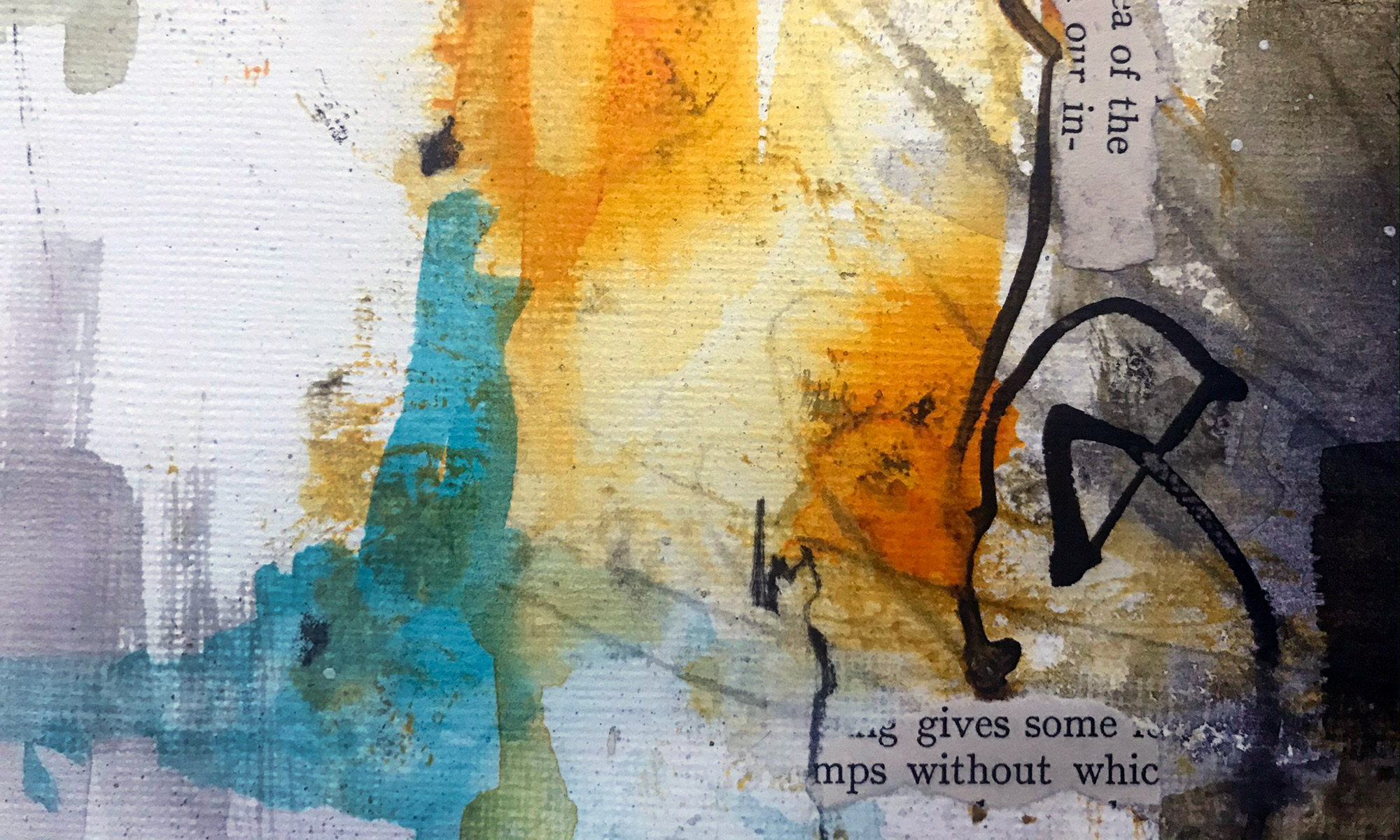
Live drawing at the English National Ballet

The English National Ballet offers live drawing workshops in venues across the country. This gives the public a unique opportunity to observe and draw ballet dancers during their daily company class. Without the costumes, makeup, lights and scenery you get a very authentic, behind-the-scenes, view of the dancers. This fresh perspective helps you to appreciate the dedication, repetition and hard work that is required to produce the effortless-looking polished performance.

The workshop was held at the Coliseum in London and was led by artist Heidi Wigmore. The session began at 10am with an introduction and some basic warm up, observation exercises. At 11am we were taken into the stalls in the main auditorium and as we had the space to ourselves we had the luxury of sitting wherever we chose.

The company class was divided into two parts; a warm up session on the barre; and a more energetic and complex set of dance routines performed across the floor. The dancers arrived wearing furry boots, leggings and jumpers to keep their limbs warm, which were gradually removed as the dancers warmed up; ballet pointe shoes were only worn during the second half.

The company class finished at 12.30pm and we finished the session with a review of the work we had produced. These are a few of my drawings…

Simple blue line drawing


Female dancers
Female dancers


leaping dancers
Leaping dancers


Quick sketch from photo


Quick overlapping sketches


Sketch using two pencils simultaneously